


Understood.
5 Alarming Ways Student Visa Abuse Hurts Cyprus
Cyprus has spent years building itself into an attractive destination for international students.
That is not necessarily a bad thing.
International students bring money into the economy, rent apartments, spend money in local businesses, create demand for services and, in many cases, eventually become qualified professionals who contribute to Cyprus in meaningful ways. Universities and colleges are businesses, too, and there is nothing inherently wrong with them wanting to attract more students, increase revenue and expand their operations.
But there is a line.
And when that line begins to disappear, everyone loses.
The problem is not international students.
The problem is not universities.
The problem is not employers.
The problem is the combination of all three when immigration, education and employment systems are treated as separate businesses rather than interconnected parts of the same ecosystem.
Cyprus is increasingly facing a situation where the student route can be attractive not only to genuine students, but also to people whose primary objective is to live and work in Cyprus. At the same time, some education providers may be more focused on enrolling students and collecting tuition fees than ensuring that those students are genuinely prepared for, attending and completing their studies.
When that happens, the consequences do not stop at the university campus.
They reach the labour market.
They reach legitimate employers.
They reach local workers.
They reach the Immigration Department, the Labour Department and the Police.
And eventually, they reach the ordinary Cypriot community.
The student route is supposed to be exactly that: a student route, not student visa abuse
There is an important principle that needs to be established from the beginning.
A third-country national who comes to Cyprus for studies is coming primarily to study.
Cyprus has a legal framework specifically regulating the admission and residence of third-country nationals for educational purposes. The Migration Department explains that students must be admitted to a recognised higher education institution and pursue a full-time course leading to a recognised higher education qualification.
That distinction matters.
A student residence permit is not simply another way of obtaining residence in Cyprus with unrestricted access to the labour market.
There are legitimate employment rights available to qualifying third-country students. But those rights come with conditions.
Under the current framework, eligible students can work in specific sectors and occupations, subject to the applicable requirements. Employment is generally limited to a maximum of 20 hours per week during periods when classes are taking place and up to 38 hours per week during periods when classes are interrupted. More importantly, the employment contract must be submitted to the District Labour Office for approval and the student’s study timetable must accompany it.
In other words, being a student does not mean being automatically authorised to work anywhere, for anyone, for as many hours as the employer wants.
That should be obvious.
Yet the problem begins when the system is treated as though the distinction does not matter.

When education becomes a numbers game
There is nothing controversial about saying that universities and colleges are businesses.
They have employees to pay.
They have buildings to maintain.
They have marketing departments.
They have administrative costs.
They need students to remain financially sustainable.
The problem occurs when student recruitment becomes more important than student suitability.
An educational institution should not simply ask:
“Can this person pay the tuition fees?”
It should also ask:
“Can this person realistically complete this program?”
“Does this person meet the academic requirements?”
“Does this person have the necessary language ability?”
“Does this person understand what studying in Cyprus actually involves?”
“Are they genuinely coming here to study?”
These questions matter because admission is not just a commercial transaction.
When a university or college admits someone who is fundamentally unable to participate meaningfully in an English-language program, for example, the consequences can extend far beyond that student’s academic performance.
The student may struggle to attend classes.
They may fail examinations.
They may become frustrated.
They may stop attending altogether.
And, in the worst cases, the student’s actual priority can shift from education to employment.
The institution has collected tuition fees.
The student has obtained a route to residence.
And Cyprus has inherited a person who may now be trying to survive through employment rather than pursue the education for which their residence status was granted.
That is not a successful educational outcome.
It is a failure of the system.
English requirements cannot become a box-ticking exercise
Language requirements deserve particular attention.
Many international programs in Cyprus are delivered in English. Therefore, having sufficient English-language ability is not merely a bureaucratic requirement. It is directly connected to whether a student can understand lectures, communicate with professors, complete assignments, participate in examinations and actually receive the education they are paying for.
If language requirements are treated as something that can simply be overcome because someone is willing to pay tuition, the institution is effectively selling an educational product that the customer may not be capable of using.
That is unfair to the student.
It is unfair to genuine students.
And ultimately, it damages the reputation of Cyprus as an education destination.
There is a huge difference between helping a student improve their English and admitting someone who is simply not equipped to participate in the program.
One is education.
The other risks becoming a commercial transaction wearing the clothes of education.
The biggest problem: students who are not really students
This is where the conversation becomes particularly uncomfortable.
There is a legitimate student who attends lectures, completes coursework, sits examinations and works within the employment conditions attached to their status.
Then there is someone who enrols in an institution primarily because the student route provides a way to live in Cyprus while their real objective is employment.
Those two people should not be treated as the same.
The first is contributing to Cyprus through education and lawful employment.
The second risks turning an education-based immigration route into an unofficial work route. And upon expiry of the student visa, potential fraudulent asylum application.
And this is where the responsibilities of educational institutions become enormous.
If an institution is enrolling people who do not genuinely intend to study, failing to monitor attendance appropriately, or continuing to treat someone as a student when their relationship with the institution has effectively collapsed, the consequences can become serious.
The student route exists because Cyprus is willing to grant residence for a specific purpose.
That purpose matters.
The Migration Department explicitly states that the legal framework determines the conditions for admission, residence, economic activity and the withdrawal or non-renewal of student residence permits.
A residence permit is therefore not just a piece of plastic.
It represents a legal status.
And legal status comes with responsibilities.
When the student becomes a worker instead
Once a student stops behaving like a student but continues relying on student status to remain in Cyprus, another problem appears.
Employment.
There is nothing wrong with a student working legally.
In fact, Cyprus expressly provides a framework allowing eligible third-country students to work in specified sectors and occupations. The current Department of Labour information includes areas such as retail, manufacturing, agriculture, food services, hotels and ready-food delivery, subject to the relevant requirements.
The problem is illegal employment.
A student cannot simply decide that because they possess a student residence permit, they can work unlimited hours, take any job they want or ignore the employment approval process.
For qualifying student employment, the contract must be properly processed and approved, and the working hours must not conflict with the student’s study timetable.
This is where some employers also need to take a long, hard look at themselves.
Because the responsibility cannot be placed entirely on the student.
Employers are part of the problem too
It is easy to point a finger at foreign workers.
It is considerably harder to look at the business owner who knowingly hires them illegally.
But both sides matter.
A worker who is desperate for income may accept employment without the appropriate authorisation.
An employer who knows that the person does not have the right to perform that work may still hire them because they are cheaper, more flexible or less likely to challenge poor working conditions.
That is where exploitation can begin.
An employer might pay below the lawful amount.
They might fail to declare the employee properly.
They might ignore working-hour restrictions.
They might make cash payments.
They might tell the worker that “everyone does it.”
And suddenly the person who arrived in Cyprus to study is working significantly more than permitted, while the employer is gaining a competitive advantage over businesses that follow the rules.
That is not entrepreneurship.
That is a race to the bottom.
Cyprus’s Labour Inspectorate explicitly identifies undeclared work as employment without the corresponding Social Insurance contributions, including situations where contributions are made based on a salary lower than the actual salary. The Inspectorate also points out that undeclared work creates unfair competition and deprives unemployed people of legitimate job opportunities.
The consequences can also be substantial.
As of the current framework, administrative penalties for undeclared work can start at €1,000 per employee for the month in which the violation is detected, with additional amounts for earlier months. The authorities can also require retrospective contributions, and repeated violations can result in increased fines and potential temporary closure of a business.
So when an employer says:
“It’s only one student.”
It is worth asking:
One student doing what?
For how many hours?
For what salary?
Under what contract?
With what approval?
And with what Social Insurance contributions?
What happens to the legitimate labour market?
This is where the issue stops being an immigration debate and becomes a labour-market debate.
Imagine two businesses.
Business A follows every rule.
It hires employees legally.
It pays the appropriate salary.
It pays Social Insurance.
It complies with working-hour requirements.
It completes the necessary procedures.
Business B hires workers illegally.
It pays them less.
It avoids some contributions.
It ignores working-hour restrictions.
It does not necessarily have the same administrative costs.
Business B can potentially offer cheaper services.
Now Business A has two choices:
Increase prices and potentially lose customers.
Or cut costs.
This is precisely why undeclared work is not a victimless offence.
The Labour Inspectorate itself identifies unfair competition and the loss of legitimate job opportunities as consequences of undeclared work.
And the effects multiply.
A legitimate worker looking for employment competes against someone being employed outside the rules.
A legitimate business competes against a business cutting costs through illegal employment.
The government must dedicate resources to inspections and enforcement.
And the public ultimately carries part of the cost.
This is the vicious cycle.
And then there is food delivery
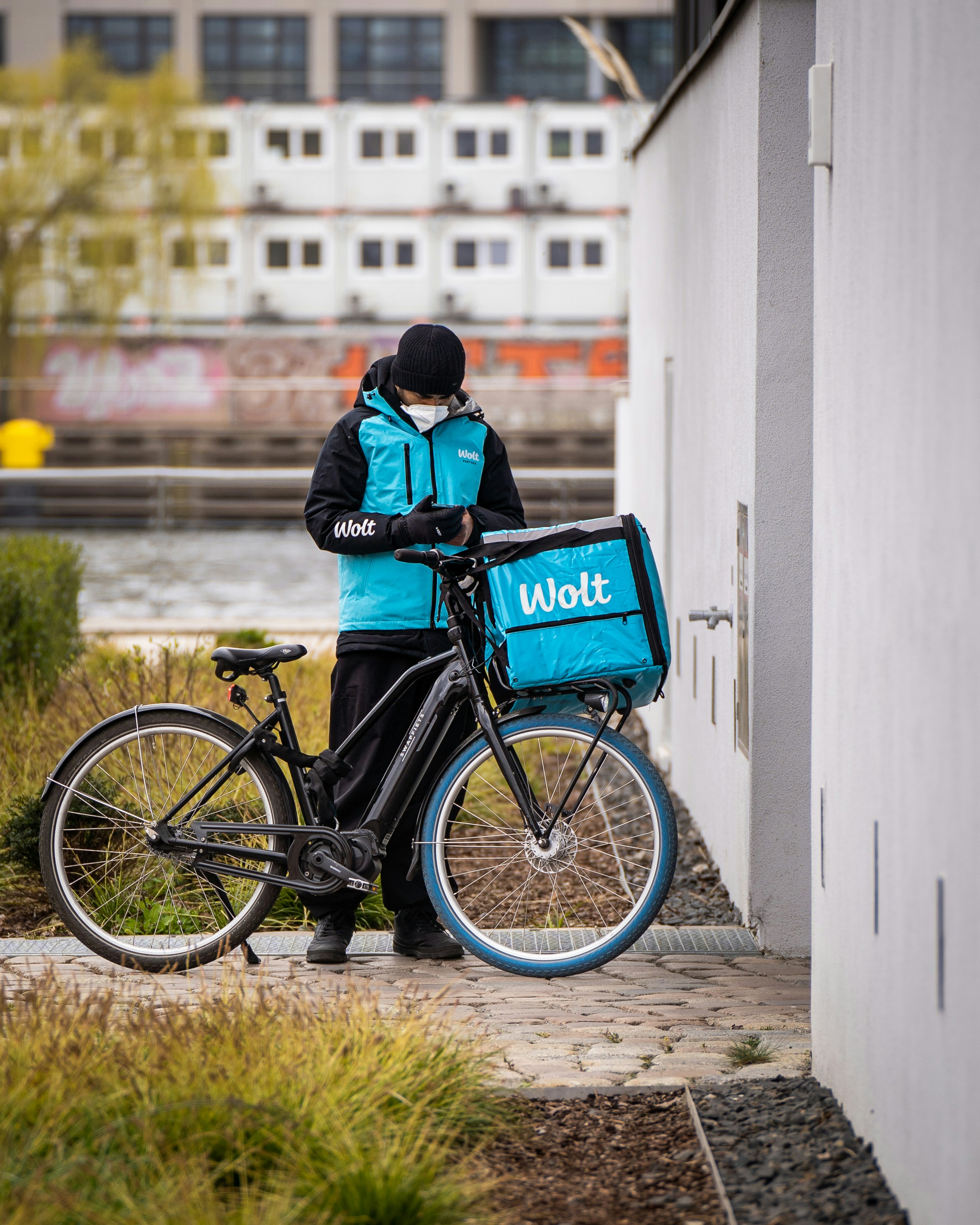
Food delivery has become one of the most visible examples of this problem.
It is also an area where we need to be precise.
There is nothing inherently illegal about delivering food by bicycle.
Bicycles are legitimate road users, and a person does not need a conventional motor vehicle driving licence simply because they ride a bicycle.
The problem arises when the bicycle becomes a convenient vehicle for unregulated employment.
A person can potentially deliver food without the same motor-vehicle costs associated with a scooter or car.
There is no conventional driving licence requirement for an ordinary bicycle.
There is no motor vehicle road tax.
There is no motor vehicle insurance requirement in the same form as for a car or motorcycle.
That makes bicycles an attractive option for delivery work.
But none of those facts make unauthorised employment legal.
If a person is working without the appropriate right to work, or working outside the conditions attached to their status, the fact that they are riding a bicycle does not change the immigration or employment position.
And there is another concern.
Safety.
Cyprus roads were not designed exclusively around bicycles. Delivery riders share the road with cars, buses, motorcycles and heavy vehicles. They may be working long hours, under pressure to complete orders quickly and sometimes in difficult weather or traffic conditions.
The question therefore should not simply be:
“Does the rider have a driving licence?”
For a bicycle, that may not be the relevant question.
The better questions are:
“Does this person have the right to work?”
“Is the employment properly declared?”
“Is the employer complying with the student’s permitted working conditions?”
“Are Social Insurance obligations being met?”
“Are the working conditions safe?”
Those are the questions that actually matter.
The burden eventually falls on the authorities
When these problems accumulate, someone has to clean them up.
That someone is the state.
Immigration authorities have to identify people who are no longer complying with the conditions of their residence.
The Labour Department has to investigate illegal or undeclared employment.
The Police may become involved where further investigation or enforcement is required.
And inspection resources that could be directed toward other priorities are inevitably consumed by cases that should never have reached this stage.
Cyprus already carries out thousands of labour inspections every year. Official figures show 7,920 inspections in 2025, involving 6,544 employers and 18,366 employees. The same statistics recorded 1,095 illegal workers identified during those inspections.
These numbers demonstrate that illegal employment is not some imaginary problem.
It exists.
And it requires enforcement.
But enforcement alone is not enough.
The system needs prevention.
The solution cannot be “stop bringing foreign students”
That would be the wrong conclusion.
International students are not the enemy.
Neither are foreign workers.
Cyprus needs workers.
Cyprus benefits from international education.
Cyprus benefits from legitimate immigration.
The problem is misuse.
A genuine student should be welcomed.
A student who wants to study, graduate and contribute to Cyprus should have access to the correct immigration and employment pathways.
A business that genuinely needs a foreign employee should be able to pursue the correct work permit procedure.
An employer should be able to hire legally without being undercut by competitors using undeclared labour.
And an educational institution should be able to make money from education without turning the student residence system into an alternative employment pipeline.
Everyone can win.
But everyone has to play by the rules.
Universities and colleges need to understand their role
Educational institutions sit at a critical point in this system.
They are often the first organisation to interact with an international student.
They know what programme the person has enrolled in.
They know whether the student is attending.
They know whether tuition fees have been paid.
They know whether the student is progressing academically.
And, in many cases, they are involved in the student’s immigration process.
That creates responsibility.
The answer is not for universities to become immigration police.
Nor should educational institutions be expected to guarantee that every student will behave perfectly.
But there must be a meaningful distinction between recruitment and responsible education.
If an institution is selling education to an international student, it should genuinely provide education.
If a student is struggling with immigration documentation, the institution should provide clear information or direct them to qualified professionals.
If there are questions about whether the student is maintaining their studies, those issues should not simply be ignored.
And if someone is using an institution purely as a vehicle to obtain residence while having no meaningful intention of studying, that undermines the institution itself.
In the long term, universities and colleges that prioritise quality will benefit from stronger reputations.
Those that prioritise volume at any cost risk contributing to a problem that eventually results in greater scrutiny and tighter controls for everyone.

Students also have responsibilities
It is equally important not to portray every international student as a victim.
Students have responsibilities too.
If someone comes to Cyprus under a student residence permit, they should understand what that status actually means.
They should attend their studies.
They should maintain the requirements of their programme.
They should work only where permitted.
They should respect the applicable working-hour limits.
They should ensure that their employment documentation is properly processed.
And they should not assume that an employer saying “don’t worry, it’s fine” makes something legal.
It does not.
A student who knowingly accepts illegal employment may ultimately put their own residence status at risk.
The temptation can be understandable.
Rent is expensive.
Living costs are high.
Students need money.
But short-term financial relief can create long-term immigration problems.
And employers need to stop exploiting the loophole
Perhaps the most uncomfortable part of this discussion is that employers cannot complain about illegal workers while simultaneously benefiting from them.
You cannot complain that immigration is creating labour-market problems while hiring someone because their immigration status allows you to pay them less.
You cannot complain about unfair competition while creating unfair competition.
You cannot demand stronger enforcement while participating in the practices that make enforcement necessary.
If you need an employee, employ them legally.
If the person needs a work permit, follow the work permit procedure.
If the person is a student, verify their student employment rights.
If their permitted hours are limited, respect those hours.
If their employment requires approval, obtain the approval.
It really is that simple.
This is why compliance matters
At Rideo Group, we believe that immigration and employment compliance should not be about finding loopholes.
It should be about finding the correct legal route.
That means helping businesses understand when they need to follow a work permit procedure and what that procedure requires.
It means helping potential employees understand what employment rights they actually have.
It means helping international students understand their responsibilities and ensuring that their immigration status reflects their genuine purpose in Cyprus.
And it means helping educational institutions understand that responsible international student recruitment does not end when the tuition fee is paid.
There are legitimate pathways.
There are legitimate students.
There are legitimate employers.
And there are legitimate opportunities.
The goal should be to connect all three without compromising anyone’s rights.
We cannot fix a vicious cycle by blaming one side
The easiest thing would be to blame the student.
Then the university blames the student.
The employer blames the worker.
The public blames immigration.
Immigration blames employers.
The employer blames universities.
And everyone continues pointing fingers.
Meanwhile, the cycle continues.
The reality is much simpler.
Everyone has a role.
Universities and colleges must take responsibility for the quality and legitimacy of their student recruitment.
Students must respect the conditions attached to their residence status.
Employers must stop hiring people illegally and exploiting workers who are vulnerable because of their immigration status.
Professional advisers must provide accurate guidance instead of helping people look for loopholes.
And the authorities must continue enforcing the law while ensuring that legitimate students and workers are not unfairly penalised for the misconduct of others.
This is not an argument against international students.
It is an argument for genuine international students.
It is not an argument against foreign workers.
It is an argument for lawful employment.
It is not an argument against universities making money.
It is an argument for universities making money by providing genuine education.
And it is not an argument against businesses hiring third-country nationals.
It is an argument for businesses hiring them correctly.
Cyprus needs a system that rewards compliance
The ultimate objective should not be to make Cyprus less attractive.
It should be to make Cyprus better organised.
A student who genuinely wants an education should be able to come here without being viewed with suspicion because other people abused the system.
A business that follows the law should not be punished economically because another business is willing to hire illegally.
A local worker should not lose opportunities because an employer has decided that undeclared labour is cheaper.
A university that invests in quality education should not be placed in the same category as an institution that treats international recruitment as nothing more than a numbers game.
And the authorities should not have to constantly play catch-up with problems that could have been prevented at the beginning of the process.
Cyprus has an opportunity to build a stronger model.
One where education means education.
Where employment means legal employment.
Where immigration status reflects the person’s actual purpose.
And where businesses can grow without relying on exploitation.
The student route should remain open to genuine students.
The employment route should remain open to legitimate workers.
The business environment should remain open to responsible employers.
But the gaps between these systems should not become loopholes.
Because when they do, everybody eventually pays.
At Rideo Group, our role is to help prevent that.
Whether you are a university or college dealing with international students, a business looking to employ a third-country national, or an individual trying to understand the correct route to work and reside in Cyprus, compliance should come before convenience.
Rideo Group assists businesses, educational institutions and potential employees in navigating the appropriate procedures, whether that means pursuing the correct work permit route or ensuring that someone coming to Cyprus as a student is genuinely able to study and maintain the requirements of their status.
Cyprus does not need fewer legitimate students.
It does not need fewer legitimate workers.
It needs fewer people exploiting the system, and fewer businesses and institutions willing to look the other way.
Because the solution is not to close the door.
The solution is to make sure the people coming through it are here for the right reasons, under the right status, doing the right thing.
Disclaimer:
The information in this article reflects an opinion and the legal framework and practical realities as of 2026. Laws and procedures may evolve. For up-to-date advice tailored to your case, we recommend booking a consultation with Rideo Group’s expert team.