

Social Insurance Shake-Up in Cyprus: A Bureaucratic Bottleneck for Foreign Workers and Employers
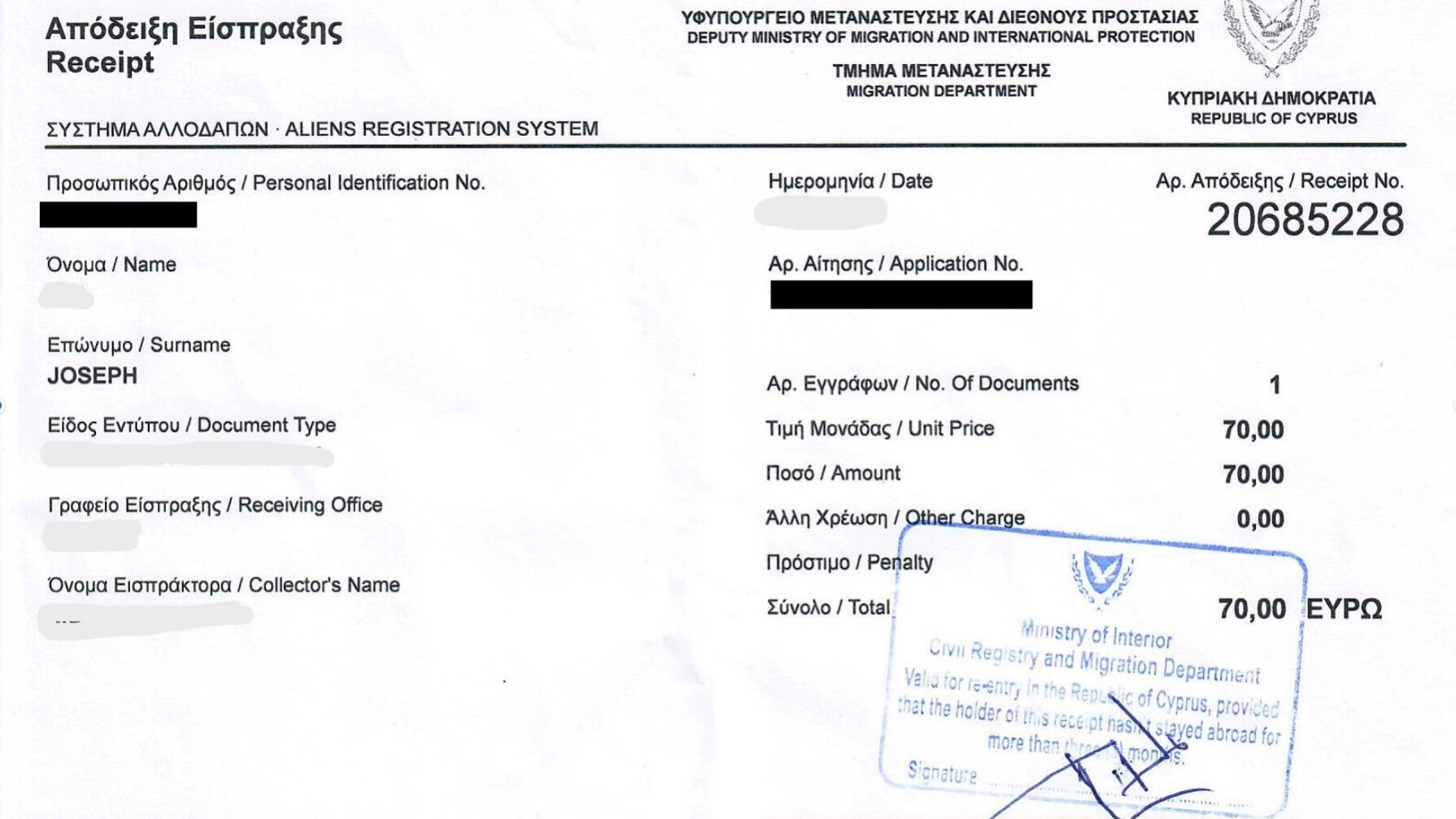
As of July 2025, a critical change has come into effect in Cyprus that directly affects foreign workers and the businesses that employ them. The Social Insurance Services will no longer accept immigration receipts as valid documentation for registering new employees on employment visas. Instead, employers must now wait for the physical residence car to be issued by the Civil Registry and Migration Department (CRMD) before initiating social insurance contributions.
At first glance, this might sound like just another administrative tweak—but in reality, it’s a deeply disruptive change that’s already creating headaches across multiple sectors.
Let’s unpack what’s changed, why it’s a problem, and what it could mean for the thousands of non-EU workers in Cyprus and their employers.
What Exactly Has Changed?
Previously, when a non-EU national in Cyprus on an type of employment visa, they could be registered with the Social Insurance Services using the “immigration receipt”—a temporary document issued by immigration upon submitting the residence permit application. This allowed employers to register the employee promptly and begin paying social insurance contributions from the start of employment, avoiding any legal gray zones or delays.
But as of July 2025, this is no longer the case.
Social Insurance now requires the actual physical residence permit card—not the receipt or any temporary documentation—before processing a registration. No card, no registration.
Why This Is a Big Deal
1. Delays in Residence Card Issuance
The biggest issue? The physical cards take months to arrive. In some cases, up to six months or longer. The Civil Registry is already notorious for its processing delays, and this change only adds to the pile of pending cases.
While the employee is technically allowed to begin working once the application is submitted, the employer cannot make social insurance contributions until the card is issued. That’s a legal and operational problem.
2. Fines for Employers
Under Cypriot law, employers are obligated to pay social insurance from the day employment begins. Failure to do so incurs financial penalties and potential audits. But now, employers are placed in a catch-22:
- If they don’t pay contributions, they risk penalties.
- But they can’t pay contributions—because the system won’t allow registration without the card.
This is not just frustrating; it’s structurally unjust. Employers are being punished for something completely out of their control.
3. No Clarity from Authorities
So far, neither the Social Insurance Services nor the Civil Registry and Migration Department has provided a solution or even a timeline for resolving this contradiction.
There has been no communication about:
- Expediting residence card processing,
- Offering provisional registration methods,
- Or providing grace periods to protect employers and workers.
Instead, businesses and workers alike are left in limbo.

How Does This Affect Employees?
For foreign workers, especially those from third countries (non-EU), this change creates immediate vulnerability.
1. Delayed Benefits and Legal Coverage
Without social insurance registration:
- Workers may not be covered for accidents at work, maternity leave, sick pay, or unemployment benefits.
- They cannot access certain public services, nor can they accrue pension contributions or proof of legal employment.
In other words, they are working without a safety net—despite having legal work authorization.
2. Employment Gaps and Exploitation Risks
Without contributions being registered:
- It may appear on paper that the employee was not working at all.
- This gap can affect future visa renewals, family reunification applications, or residency upgrades.
- Worse still, it opens the door to under-the-table agreements or unrecorded employment, which can foster exploitation in already vulnerable communities.
How Does This Affect Employers?
For companies—especially in hospitality, agriculture, construction, domestic work, and caregiving sectors that rely heavily on foreign labor—this change is a ticking time bomb.
1. Operational Disruptions
Businesses that recruit from abroad cannot integrate new hires into their payroll legally. This creates gaps in accounting, delays in onboarding, and issues with compliance audits.
2. Legal Liability
Even if the delay is due to bureaucratic inefficiencies, employers will be held liable for non-compliance. Social Insurance inspectors are not known for leniency, and documentation showing “we were waiting for the card” may not be accepted as a valid excuse.
3. Financial Risk
- Late contribution penalties are calculated daily and can grow substantially.
- These fines are not waived just because the residence permit card hasn’t been printed yet.
This puts small and medium businesses—already struggling with rising costs—in a difficult position.
Why the Sudden Policy Change?
The exact reason for the change hasn’t been publicly explained.
Whatever the reason, the implementation has been rushed and utterly lacking in support mechanisms.

A System That Punishes Legality
Let’s be clear: this new policy doesn’t stop people from working illegally—it just penalizes those trying to follow the rules.
Legal employees with valid entry permits, jobs lined up, and submitted applications are now treated as ghosts in the system for months. And employers willing to do everything above-board are slapped with fines for trying to do the right thing.
It’s bureaucracy at its most illogical.
What Could Happen Now?
More Informal Work
Faced with the delay, many employers might resort to unofficial hiring practices until the card arrives—meaning employees are unregistered, unpaid for insurance, and legally invisible.
This brings us dangerously close to normalizing shadow employment.
Recruitment Drops
Businesses may become reluctant to hire third-country nationals, knowing the complications involved. That’s a loss for diversity, growth, and the sectors that depend on international workers.
Mass Backlogs and Bottlenecks
If every worker needs to wait for a physical card before registration, and if issuance continues to take up to six months, a massive administrative backlog is inevitable.
Social Insurance won’t see those contributions. CRMD will be flooded with status update requests. And tax compliance systems will be riddled with gaps.
Rideo Group’s Response: Seeking Workarounds
At Rideo Group, we’ve been closely monitoring this shift and its repercussions. Since the policy change was enforced, our team has been in constant contact with immigration offices, civil registry representatives, and legal consultants to try and find viable workarounds.
We’ve explored:
- Whether employers can submit some form of declaration.
- If certain offices are interpreting the rule differently.
- Whether we can obtain pre-approval slips to appease Social Insurance officials.
But as of the time of writing, no consistent or official solution exists. Each case is being handled ad hoc, with inconsistent results depending on the office or even the staff member processing the file.
Still, we remain committed to protecting our clients from unnecessary legal exposure. We’re actively advocating for clearer guidelines and system-wide coordination between departments.
What Needs to Happen Now?
To prevent this issue from snowballing into a national labor crisis, three urgent steps must be taken:
1. Provisional Registration Must Be Reinstated
Immigration receipts should continue to be accepted as interim documents for social insurance registration until the final card is issued.
This is the simplest and most immediate fix.
2. CRMD Needs to Improve Processing Times
There must be a public commitment to reducing processing times for residence cards. Issuing a card in 4–6 weeks should be the standard—not the exception.
This will require more staff, better systems, and digital upgrades—but it’s long overdue.
3. Transparency and Communication
Authorities need to inform the public and the private sector about what changes are coming, why, and how to adapt. At the moment, businesses are learning about this change only after being blocked from registering employees—which is too late.
Final Thoughts
This new policy, though possibly well-intentioned, has been executed without foresight, infrastructure, or safeguards. In doing so, it disrupts legal employment, creates unnecessary risks, and penalizes those who are trying to play by the rules.
Foreign workers in Cyprus already face significant hurdles—from language barriers to housing challenges and cultural adaptation. Adding bureaucratic landmines only makes integration harder and more precarious.
Employers, meanwhile, are being boxed into a no-win situation.
Until the system aligns across departments and prioritizes practical implementation over administrative red tape, the effects of this change will continue to be felt across industries, communities, and the national economy.
As always, Rideo Group will continue to monitor the situation and advocate for our clients’ rights—pushing for clarity, fairness, and smarter governance.
Need help navigating Cyprus bureaucracy?
Whether you’re an employer trying to register a new hire or a foreign worker caught in the red tape, Rideo Group is here to support you. Our team is actively working on solutions and can guide you through the process, every step of the way.
Disclaimer:
The information in this article reflects the legal framework and practical realities as of 2025. Laws and procedures may evolve. For up-to-date advice tailored to your case, we recommend booking a consultation with Rideo Group’s expert team.