

Introduction
In the pursuit of unraveling Europe’s charm, understanding the essence and significance of the Schengen Visa becomes paramount. It stands not just as a travel document but as a portal to a realm where boundaries blur, languages blend, and adventures know no limits.
Europe, a continent steeped in history, brims with a kaleidoscope of cultures, landscapes, and experiences awaiting the curious traveler. Yet, amidst this treasure trove of diversity lies a bureaucratic threshold: the Schengen Visa, a key unlocking the vibrant tapestry of 27 countries seamlessly interconnected by the Schengen Agreement.
Let’s delve into the intricacies of the Schengen Visa—its essence, importance, and the doorway it opens for those yearning to traverse Europe’s rich and multifaceted landscape. From its foundational principles to the practicalities of application, let’s embark on a journey through the world of the Schengen Visa, where each stamp holds the promise of a new cultural immersion and every entry unlocks a world of endless exploration.
What is a Schengen Visa?
The Schengen Visa stands as an emblem of unified travel within the Schengen Area, a zone encompassing 22 European Union (EU) countries and four non-EU members. This visa allows holders to move freely across these nations sans internal border controls. Named after the Schengen Agreement signed in 1985 in Luxembourg, the visa simplifies travel logistics by providing a single-entry permit for visiting multiple countries within the zone.

Importance of a Schengen Visa
The significance of the Schengen Visa transcends mere permission to enter Europe; it symbolizes a gateway to immersive cultural experiences, business opportunities, educational pursuits, and tourism adventures. For travelers, it eliminates the need for multiple visas when planning to explore various Schengen countries, streamlining the process and enhancing convenience.
Moreover, businesses benefit from the ease of access the visa provides, fostering international collaborations and trade relationships. Educational institutions attract students from across the globe, enriching academic diversity and fostering cross-cultural exchanges.
Uses of a Schengen Visa
A Schengen Visa grants access to a wide array of activities within the Schengen Zone, including:
- Tourism: Travelers can explore iconic landmarks, scenic landscapes, and historical sites across multiple countries without the hassle of applying for individual visas.
- Business: Facilitating ease of movement for entrepreneurs, professionals, and investors fostering economic collaborations and trade relations.
- Education: Students can pursue academic opportunities across multiple universities in different Schengen countries.
- Medical purposes: Seeking medical treatment or consultations in renowned healthcare facilities within the Schengen Area is made feasible.

Type of Schengen Visas
Uniform Schengen Visa (USV)
: This covers short-term stays for tourism, business, or visiting family/friends. Holders of a Uniform Schengen Visa can travel to these countries: Austria, Belgium, Croatia, the Czech Republic, Denmark, Estonia, Finland, France, Germany, Greece, Hungary, Iceland, Italy, Latvia, Liechtenstein, Lithuania, Luxembourg, Malta, the Netherlands, Norway, Poland, Portugal, Slovakia, Slovenia, Spain, Sweden, and Switzerland.
Important Note: even though Cyprus is not in Schengen, it does accept Schengen Visa holders to enter the island.
The “A” category refers to an Airport Transit Visa, which permits its bearer to transit through the international zone of a Schengen country’s airport without entering the Schengen Area. An airport transit visa is required for citizens traveling from one non-Schengen nation to another non-Schengen country via a flight change in a Schengen country airport.
The “C” category refers to a Short-term visa, which allows its bearer to live in a Schengen Area for a set period of time, depending on the validity of the visa. This specific category, depending on the holder’s purpose of travel, can be obtained in the form of:
a. Single-entry visa:
A single-entry visa permits the holder to enter the Schengen Area only once during the time period specified on the visa sticker affixed to their passport. Once a visa holder leaves Schengen area, he or she cannot return, even if they have not spent the number of days allowed by the embassy that issued the visa.
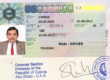
Some individuals confuse and misunderstand the single-entry visa, believing that it refers to the number of countries that the visa holder is entitled to visit and that it only permits them to enter one nation. In actuality, the territory you are allowed to visit is indicated at the “Valid for” tag on your visa sticker, whilst the time you are allowed to remain is indicated near the “Number of entries” tag.
b. Double-entry visa:
A double-entry visa works in the same way as the single-entry visa described above. The only difference between a single-entry and a double-entry visa is that the latter allows you to return to Schengen territory after you have left it.
You must be extremely cautious not to exceed the number of days you are permitted to stay in the Schengen Zone, as well as the time frame in which you can spend these days in the EU. Again, do not confuse the “double-entry” designation with the number of countries you are allowed to enter and stay in within the time limit.
When you leave the Schengen Area for the second time with this visa, you no longer have the right to return, even if you have not spent all of the days you were allowed to stay. However, if you have previously earned a double-entry visa and are a frequent visitor to the Schengen area, you are more likely to be given a multiple-entry visa, as stated below.
c. Multiple-entry visa:
A multiple-entry visa permits its holder to enter and exit the Schengen Area as many times as they wish as long as they do not violate the 90/180 rule.
You may apply for and acquire one of the following multiple-entry visa types based on how frequently you travel to the Schengen zone:
- 1-year multiple-entry visa
- 3-year multiple-entry visa
- 5-year multiple-entry visa
Limited Territorial Validity Visa (LTV)
This form of visa allows you to travel just within the Schengen State that issued the visa or, in some situations, only the specified Schengen States mentioned when applying for the visa. Apart from these Schengen nations, this visa is not valid in any other Schengen country not previously stated. The holder of this sort of visa is not permitted to enter or transit any other Schengen country that is not the initial and final destination. As an exemption to the ordinary USV system, this sort of visa is provided in very unusual instances such as humanitarian grounds or under international responsibility.
Individuals who do not have a valid travel document but need to go to a Schengen area in an emergency may be eligible for this sort of visa.

Applying for a Schengen Visa
The process of obtaining a Schengen Visa involves several steps:
- Identify the type of Schengen Visa.
- Identify the Embassy or Consulate:
- Contact the embassy or consulate of the Schengen country you plan to visit or stay in for the longest duration. If visiting multiple countries, apply at the embassy of the primary destination.
- Gather Required Documents:
- Application form: Complete and sign the Schengen Visa application form.
- Passport: Valid for at least three months beyond the intended stay with two blank pages.
- Passport-sized photos: As per the embassy’s specifications.
- Travel itinerary: Including flight reservations, accommodation details, and travel insurance.
- Proof of financial means: Bank statements or sponsorship letters.
- Purpose of visit: Invitation letters, conference registrations, or tourist itineraries.
- Health insurance: Covering a minimum of €30,000 for medical emergencies and repatriation.
- Additional documents: Vary based on the purpose of the visit (e.g., employment letter, enrollment in educational institution).
- Schedule an Appointment:
- Book an appointment at the embassy or consulate for submitting your application and attending an interview if required.
- Attend the Interview:
- Answer questions related to your travel plans, purpose of visit, and personal details. Be prepared with all necessary documents.
- Visa Processing:
- Wait for the embassy or consulate to process your application. Processing times can vary based on the country and the type of visa.
- Receive Your Visa:
- Once approved, collect your passport with the Schengen Visa stamp from the embassy or consulate.
Conclusion
The Schengen Visa stands as a pivotal document, fostering seamless travel experiences within Europe. Its significance lies not only in simplifying bureaucratic procedures but also in opening doors to multifaceted experiences encompassing culture, business, education, and healthcare. Understanding the application process is key to embarking on this journey, making the dream of exploring Europe a tangible reality for travelers worldwide.
Understanding these regulations is crucial for anyone planning to apply for a Schengen Visa, as compliance with the established procedures ensures a smooth and legal transition. Rideo group wishes to equip you with the essential knowledge and steps required to embark on this paper work filled journey to Europe.
We find immense pride in our dedicated team of experts prepared to handle the intricate requirements mentioned earlier. Assigning us the responsibility of overseeing the entire process ensures meticulous attention to detail, precise document organization, prompt submissions, and comprehensive support for all your guidance requirements.
Disclaimer: Although we work hard to deliver accurate and timely information, kindly take note that rules and laws are subject to regular change. It is advised that you speak with our consultants to ensure sure that the information displayed here is accurate and up-to-date.