

US English
Cyprus Residence Permit Rejected? Don’t Worry, I’ll Help You Out
Applying for a residence permit in Cyprus can be complicated, particularly if you are unfamiliar with the country’s immigration rules and documentation requirements. Whether you are moving for employment, joining your family, studying, retiring or planning to settle in Cyprus long-term, choosing the correct residence category and preparing your application properly are essential.
Unfortunately, not every application is approved. A rejection can cause stress, unexpected expenses and delays, especially if you have already relocated, signed a rental agreement or made plans for your family.
The good news is that many avoidable application problems can be identified before submission. Understanding the requirements, preparing the correct documents and obtaining appropriate professional guidance can help reduce the risk of rejection.
In this article, we explain why Cyprus residence permit applications get rejected, what to do if your application is refused, whether you can appeal and why professional immigration assistance matters.
Understanding Residence Permits in Cyprus
Cyprus offers different residence permit categories depending on an applicant’s circumstances. There is no single permit suitable for everyone, and choosing the right one is the first step towards a successful application.
Depending on your situation, you may need to consider:
- Visitor permits: For eligible third-country nationals residing in Cyprus without employment, subject to the applicable conditions.
- Employment and residence permits: For eligible foreign nationals intending to work in Cyprus.
- Family reunification: For qualifying family members joining an eligible sponsor.
- Foreign Interest Company employment: For eligible employees of qualifying companies operating in Cyprus.
- Student residence permits: For eligible international students enrolled at recognised educational institutions.
- Digital Nomad residence permits: For eligible remote workers meeting the relevant conditions.
- Permanent Residence permits: For applicants who satisfy the requirements for the relevant long-term residence route.
- European or Cyprus Spouses: For qualifying family members joining a spouse
Each category has specific eligibility criteria, supporting documents and procedures. Requirements may also differ between initial applications, renewals and changes of immigration status.
For example, someone intending to work in Cyprus cannot assume that a visitor permit authorises employment. Similarly, having sufficient income does not automatically mean an applicant qualifies for every residence category.
Before collecting documents, you need to establish which immigration route fits your circumstances.
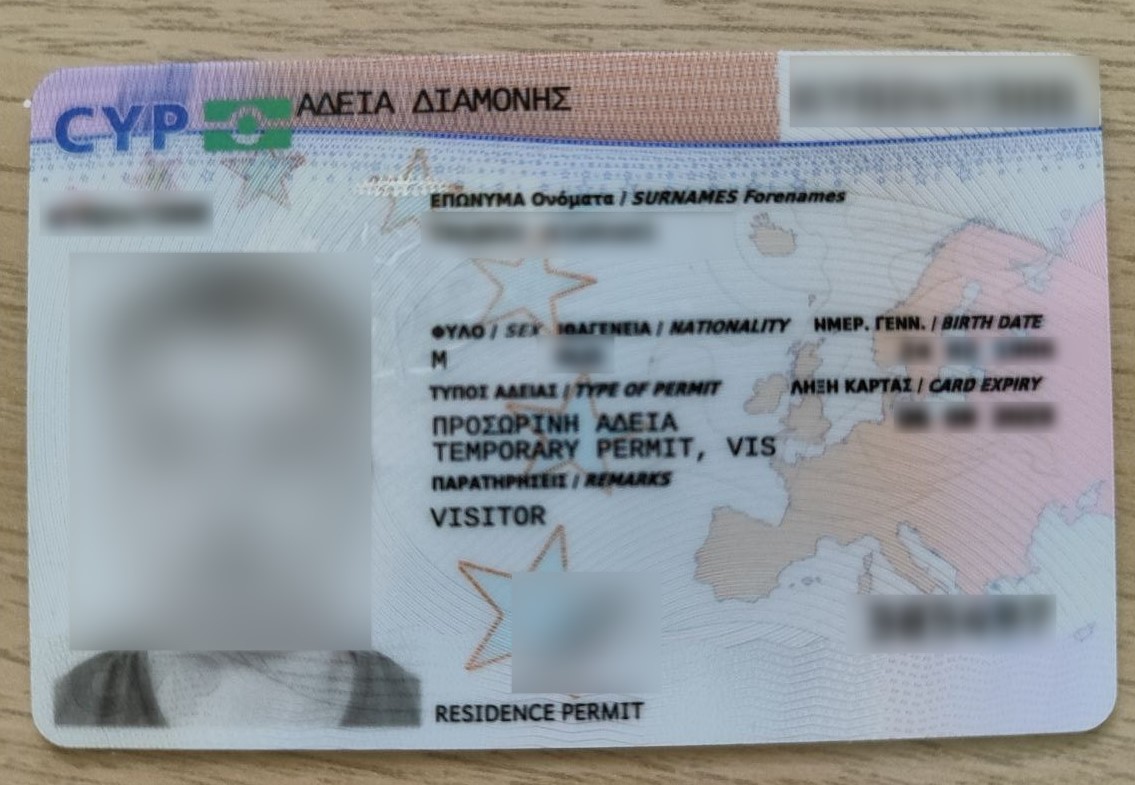
Cyprus Residence Permit Rejected…WHY?
A residence permit may be refused because the application does not meet the applicable requirements or the evidence provided is insufficient. Understanding the reason is essential because different problems require different solutions, and checking the information accurately.
Incomplete or missing documentation
One of the most common application problems is submitting an incomplete file.
Depending on the category, applicants may need passports, application forms, financial statements, employment contracts, rental agreements, insurance certificates, medical examinations, criminal record certificates or family documents.
Submitting the main documents is not always enough. Additional evidence may be needed to establish eligibility or clarify specific details.
For example, providing a bank statement does not necessarily demonstrate that an applicant meets the relevant financial requirements if the source or availability of the funds remains unclear.
When important information is missing, the authorities may be unable to establish that the applicant qualifies.
Incorrect, expired or unsuitable documents
Having a document does not automatically mean it meets the requirements.
A certificate may have expired, lack the required certification, contain incorrect information or be unsuitable for the purpose for which it is being submitted.
Foreign documents may require official translation, authentication or certification, depending on their origin and the applicable procedure. Certain documents may need to be submitted as originals or in another prescribed format.
For example, a marriage certificate issued abroad may require additional formalities before it can support a family-related application.
These details matter because documents must meet the requirements applicable to the specific case, not simply appear relevant.
Insufficient or inadequately documented financial resources
Some residence categories require applicants to demonstrate that they have sufficient financial resources to support themselves and, where relevant, their dependants.
Problems can arise when the applicant’s income does not meet the applicable criteria or when the supporting evidence does not adequately establish the source, stability or availability of the funds.
An applicant may have savings but lack the necessary supporting documentation. Another may receive regular transfers but be unable to demonstrate their nature or source.
Family circumstances can also affect the assessment, particularly when the applicant needs to support a spouse or children.
Having money in a bank account does not automatically establish eligibility. The financial evidence must satisfy the requirements of the relevant residence category.
Applying under the wrong residence category
Applicants sometimes choose a permit based on information found online, advice from acquaintances or assumptions about their eligibility.
However, the most convenient category is not necessarily the appropriate one.
Someone intending to work may apply under a category that does not authorise employment. A person relocating with family may overlook additional requirements. Another applicant may assume that meeting one financial condition is sufficient, without checking the remaining eligibility criteria.
Even a well-prepared application can be refused if the applicant does not qualify under the selected route.
This is why assessing your circumstances before applying is so important.
Inconsistencies between documents
Information across your application forms and supporting documents must be accurate and consistent.
Differences in names, dates, addresses, employment details or financial declarations may raise questions during the assessment.
Some discrepancies have straightforward explanations, such as a name change or a difference in how information appears on official documents. However, without appropriate supporting evidence, the authorities may have difficulty verifying the information.
Applicants should review their documentation carefully and address discrepancies before submission rather than assume they will be overlooked.
Failure to meet eligibility requirements
Even when every document is submitted correctly, an application can still be refused if the applicant does not meet the substantive conditions of the chosen category.
Depending on the route, these conditions may concern employment arrangements, the eligibility of a sponsoring company, family relationships, financial independence or educational enrolment.
A general checklist cannot establish whether every applicant qualifies. The relevant requirements must be assessed against the applicant’s actual circumstances.
Missed deadlines or procedural mistakes
Timing is another important consideration.
Problems may arise when applications or renewals are submitted outside the applicable period, appointments are missed, required procedures are not followed or requests for additional information are not addressed appropriately.
The consequences depend on the permit category and the applicant’s existing immigration status.
Applicants should never assume that renewal procedures, submission deadlines or requirements are identical across all residence categories.
False, misleading or unverifiable information
Submitting inaccurate declarations, altered documents or information that cannot be supported may have serious consequences.
Even when an applicant believes a particular detail is unimportant, failing to disclose or properly explain a relevant circumstance can complicate the assessment.
If you have a previous refusal, a complicated immigration history or inconsistencies in your documents, these issues should be addressed appropriately rather than ignored.
Accuracy and transparency are essential throughout the application process.
What Should You Do if Your Cyprus Residence Permit Is Rejected?
Receiving a refusal can be upsetting, but rushing into another application or appeal without understanding the reasons may make the situation more complicated.
Start by reviewing the refusal letter carefully. Identify the reasons given, the requirements the authorities consider unmet and any instructions or deadlines included in the decision.
Next, gather the documents relating to your original application, including the forms, supporting evidence and correspondence with the authorities.
The next step is to establish what went wrong. Was the problem related to missing documents, financial evidence, eligibility, inconsistencies or a procedural issue?
Once the underlying problem is understood, you can assess the available options. Depending on the decision and the applicable rules, these may include addressing a deficiency, submitting a new application where permitted, pursuing an available administrative procedure or considering a legal challenge.
Do not assume that submitting the same documents again will produce a different result. If the underlying issue remains unresolved, the application may face the same difficulties.
Equally, a refusal does not automatically mean that no options remain. The appropriate next step depends on the decision and your individual circumstances.

Can You Appeal a Cyprus Residence Permit Rejection?
In certain circumstances, a residence permit refusal can be challenged. However, the available remedy, applicable procedure, competent authority and deadline depend on the type of decision and the relevant legal framework.
An appeal or legal challenge is not necessarily as simple as submitting additional documents. It may require an assessment of the refusal reasons, the evidence considered and the legal requirements that apply to your case.
In some circumstances, a new application may be worth considering. In others, a different procedure or legal challenge may be appropriate.
Why we do not recommend appealing alone
Although you may find information online about appealing a Cyprus residence permit refusal, following general instructions without understanding your case can be risky.
An appeal needs to address the actual reasons for the decision. Repeating the original arguments, attaching additional documents without understanding what is missing or following advice intended for another immigration category may not resolve the problem.
Deadlines can also be critical. Misunderstanding the applicable procedure or delaying action may affect your ability to pursue a particular remedy.
This is why we strongly recommend obtaining professional, case-specific assistance before deciding how to respond to a refusal. Where a formal legal challenge is required, a suitably qualified legal professional should assess and handle the legal aspects of the case.
The priority is not simply to appeal as quickly as possible. It is to understand what went wrong, establish which options are available and determine the most appropriate way forward.
Why Online Research and AI Advice Is Not Enough
Online resources can be useful for understanding the general immigration process. Government websites, articles, forums and AI tools can help explain basic concepts and identify questions you may need to ask.
However, there is a significant difference between finding general information and understanding the requirements of your particular case.
Online information can be outdated or incorrect
Immigration requirements, fees, procedures and administrative practices can change. An article published several years ago may still appear in search results even though some of its information is no longer accurate.
Social media posts and online discussions may also describe personal experiences that do not reflect the rules applicable to other applicants.
Someone may have received approval despite a particular issue, but that does not mean the same issue will be irrelevant in every case.
Following unverified advice can lead to missing documents, incorrect assumptions and unnecessary complications.
AI cannot reliably assess a case it does not fully understand
AI tools can summarise publicly available information, but their answers may be incomplete, inaccurate or unsuitable for your circumstances.
An AI-generated checklist might cover the standard documents for a particular permit while overlooking an additional requirement arising from your financial situation, family circumstances or immigration history.
It may also fail to identify inconsistencies between documents or distinguish between procedures that appear similar but have different requirements.
Most importantly, a confident-sounding answer does not guarantee that the information is correct or applicable to your case.
General information is not the same as case-specific immigration guidance.
This distinction becomes especially important after a rejection. At that stage, you need to understand why the authorities refused your application and what options are actually available, rather than rely on generic instructions.
How Professional Immigration Assistance Helps Reduce Rejection Risks
Working with an experienced immigration agent can help you approach the application process more systematically and reduce avoidable mistakes.
Professional assistance is not simply about completing forms. It involves assessing the relevant requirements, identifying the appropriate residence category and ensuring that the supporting documentation is suitable for your circumstances.
An immigration professional can help by:
- Assessing your eligibility: Reviewing your nationality, financial resources, employment plans, family situation and existing immigration status to identify potentially suitable routes.
- Identifying documentation requirements: Determining which documents and supporting evidence are relevant to your category and circumstances.
- Checking documents before submission: Identifying missing information, inconsistencies, expired certificates and potential translation or certification issues.
- Identifying potential problems: Highlighting issues that may need clarification or additional evidence before the application is submitted.
- Guiding you through the process: Helping you understand the relevant procedures and respond appropriately to requests for further information.
- Reviewing refusals: Helping establish the reasons for rejection and identifying whether another application, an available administrative procedure or a legal challenge should be considered.
No immigration agent can guarantee approval, as the final decision rests with the competent authorities. However, having your case properly assessed can help you avoid preventable errors and make informed decisions throughout the process.
Why Every Cyprus Residence Permit Case Is Different
One of the biggest misconceptions about immigration is that everyone applying for the same permit should follow exactly the same process.
Although applicants may fall under the same broad category, their individual circumstances can be very different.
For example, two people applying for a visitor permit may have different sources of income, financial commitments, family responsibilities or previous immigration histories. Their supporting evidence may therefore need to address different issues.
Similarly, an employment application may depend on the circumstances of both the employee and the employer, while a family reunification application may involve additional questions about the sponsor and the family relationship.
Your financial situation, family circumstances, employment plans and immigration history can all affect which requirements are relevant to your case.
This is why a standard online checklist cannot always provide everything you need to know.
A general guide can explain the process, but it cannot replace an assessment of your personal circumstances and supporting documents. The aim should be to identify the requirements that actually apply to you and address potential problems before submission.

How Rideo Group Can Help With Your Cyprus Residence Permit
Rideo Group has a team of immigration professionals familiar with the different residence permit categories available in Cyprus. We help individuals and families understand their options and navigate the application process according to their needs, financial circumstances, family situation, employment plans and long-term objectives.
Rather than treating every application as identical, we assess each case individually to help identify the appropriate immigration route, relevant documentation and applicable procedures.
Our aim is to reduce avoidable mistakes, identify potential issues before submission and guide clients through the process with clarity and transparency.
Whether you are applying for the first time, renewing an existing permit, relocating with your family or dealing with a refusal, Rideo Group can help you understand your options and determine the most appropriate next steps.
Final Thoughts
A Cyprus residence permit rejection can be stressful, but it does not automatically mean that you have no options.
The most important step is understanding why the application was refused and determining what can be done under the rules that apply to your circumstances.
Incomplete documentation, unsuitable financial evidence, an incorrect residence category, inconsistencies and eligibility problems can all create difficulties. Many avoidable mistakes are easier to address before submission than after a refusal.
If your application has been rejected, avoid rushing into an appeal or submitting another application based solely on information found online. The correct approach depends on the refusal, your immigration history and the procedures available to you.
Professional assistance cannot guarantee approval, but it can help you understand the requirements, reduce avoidable errors and make better-informed decisions.
When your right to reside in Cyprus is at stake, getting the process right from the beginning matters.
Disclaimer:
The information in this article reflects the legal framework and practical realities as of 2026. Laws and procedures may evolve. For up-to-date advice tailored to your case, we recommend booking a consultation with Rideo Group’s expert team.